Selected work
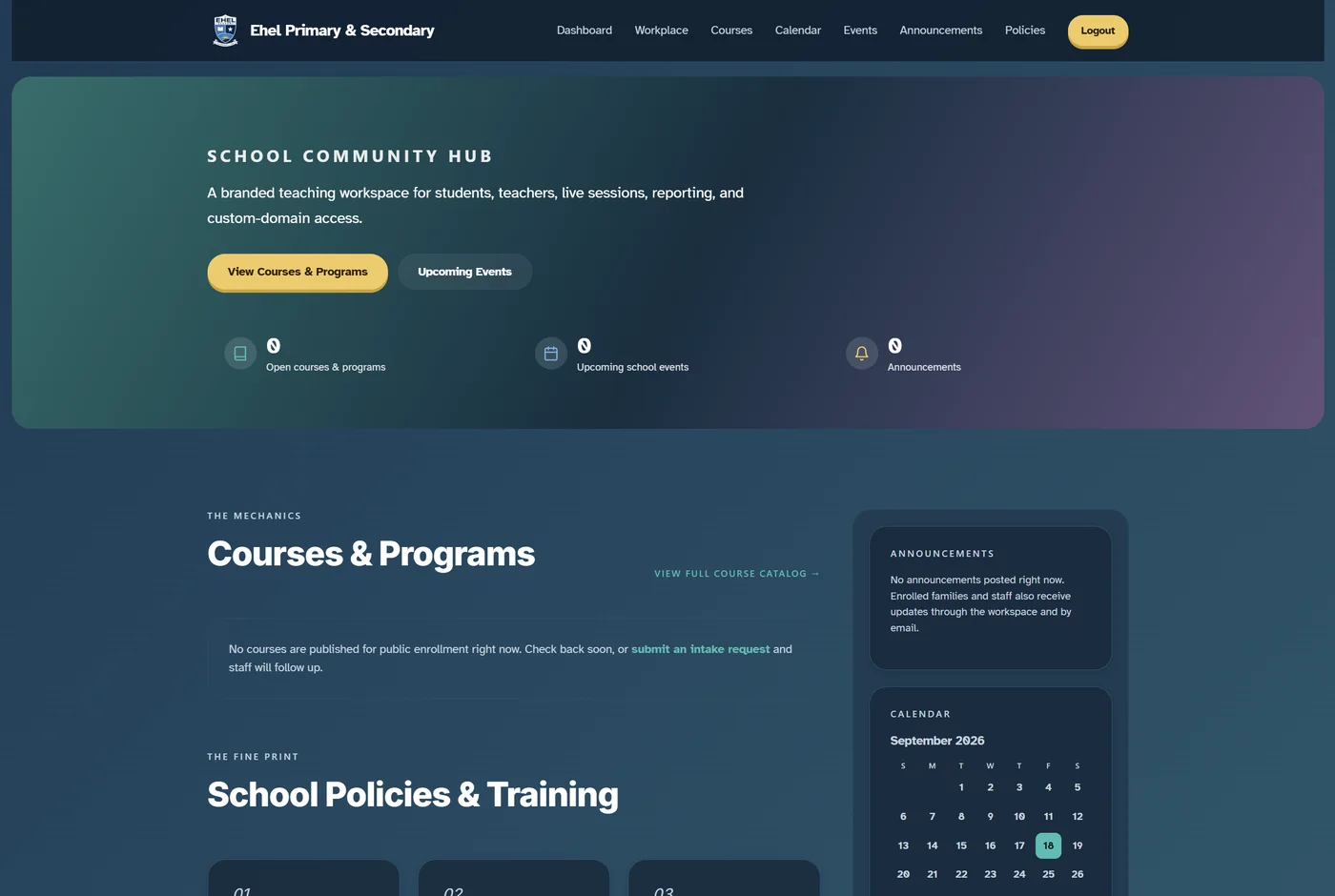
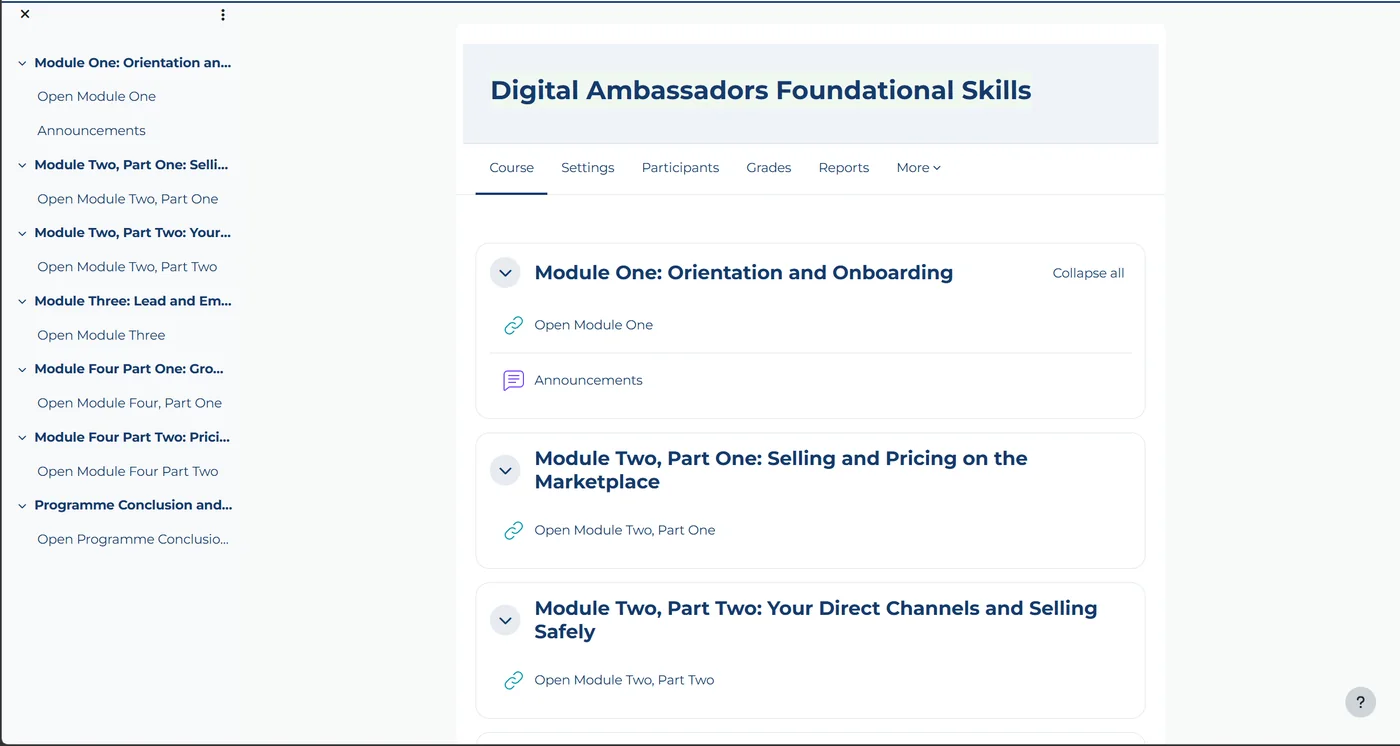
Two platforms, two very different jobs.
One built end to end with a custom frontend. One set up from scratch and rolled out to four countries. Both on Moodle.
Custom-branded learning platforms for schools and training providers. A bespoke frontend on your own domain, with Moodle doing the reliable work underneath, plus the course content and the website to go with it.
Moodle is one of the most tested pieces of education software in the world. Its engine is excellent. Its interface is not. Everything we do starts from that fact.
A branded web application on your own domain that learners, parents, and staff use instead of Moodle's screens. It talks to Moodle for courses, enrolment, and grades, so nothing a learner sees is Moodle and everything they rely on still is.
For programmes starting from nothing, we set up Moodle properly from day one: server, configuration, roles, enrolment, completion tracking, content, and branding, built cleanly enough to roll out again. Already running a Moodle that has become fragile or needs moving? We take on rescues and migrations too. Our guide to setting up Moodle properly shows how we approach it.
A platform is only part of an online school. We write original course material, produce lesson videos with translations where needed, and design the public website that persuades a family or a company to enrol in the first place. New to this? Our guide to how to start an online school walks through the decisions.
What we do not do: build a learning management system from scratch. We would not recommend it to anyone. If the complaint is about the interface, and it almost always is, a custom frontend fixes it without giving up an engine that has spent years getting the hard parts right. We explain the reasoning in why a custom frontend beats building your own LMS.
The frontend is yours. The backend is Moodle. They talk through Moodle's web services, and your learners never see the seam.
One built end to end with a custom frontend. One set up from scratch and rolled out to four countries. Both on Moodle.
We look at what your learners see today, what Moodle already handles well, and where the experience is costing you enrolments or credibility.
The login, dashboard, and catalog are designed around how you actually run your school or program, not around Moodle's defaults.
The frontend is hand-coded and wired to Moodle through its web services, tested against real courses and real enrolments.
A careful switch on your own domain, then documentation and support so your team can run it without us in the loop.
No, and we would talk you out of it. Enrolment, grading, quizzes, roles, reporting, content standards, and security updates are solved problems in Moodle. Rebuilding them means paying to re-solve them and then maintaining a software product forever. We keep Moodle as the engine and build the branded experience on top, which fixes the part people actually complain about. The full argument is in why a custom frontend beats building your own LMS.
No. A custom frontend is a separate branded application on your own domain that talks to Moodle for courses, users, enrolments, and grades. Your existing Moodle, content, and learner history stay where they are. Learners simply stop seeing Moodle's screens.
Both. For a national digital-skills programme delivered through Mandek Consulting, we set up Moodle from scratch, from the server through roles, enrolment, completion tracking, content, theming, and branding, then cloned the platform for three more countries. The full case study walks through it. If you already run Moodle and it has become fragile, needs upgrading, or needs moving to new hosting, we take on rescues and migrations too, with learner data and progress protected throughout.
Yes. For our own online school we wrote original course material aligned to the Cambridge Primary and Lower Secondary frameworks. We can also produce lesson videos and translate them into the languages your learners speak, and design the public website that persuades a family or a company to enrol.
It depends on the route and the scope. A restyle of Moodle is a few thousand dollars, a custom frontend on Moodle sits in the low tens of thousands, and a build from scratch runs into six figures. Our guide to how much a custom LMS costs breaks down the ranges and what drives them. We scope every project and quote a fixed price up front.
Tell us what your learners see today and what you wish they saw. We will give you a straight answer on whether a theme, a custom frontend, or leaving it alone is the right call, and show you what we would build.